
Prepare your security operations for the Microsoft Defender portal by modernizing Microsoft Sentinel workflows, Defender XDR operations, detections, automation, and SOC processes.
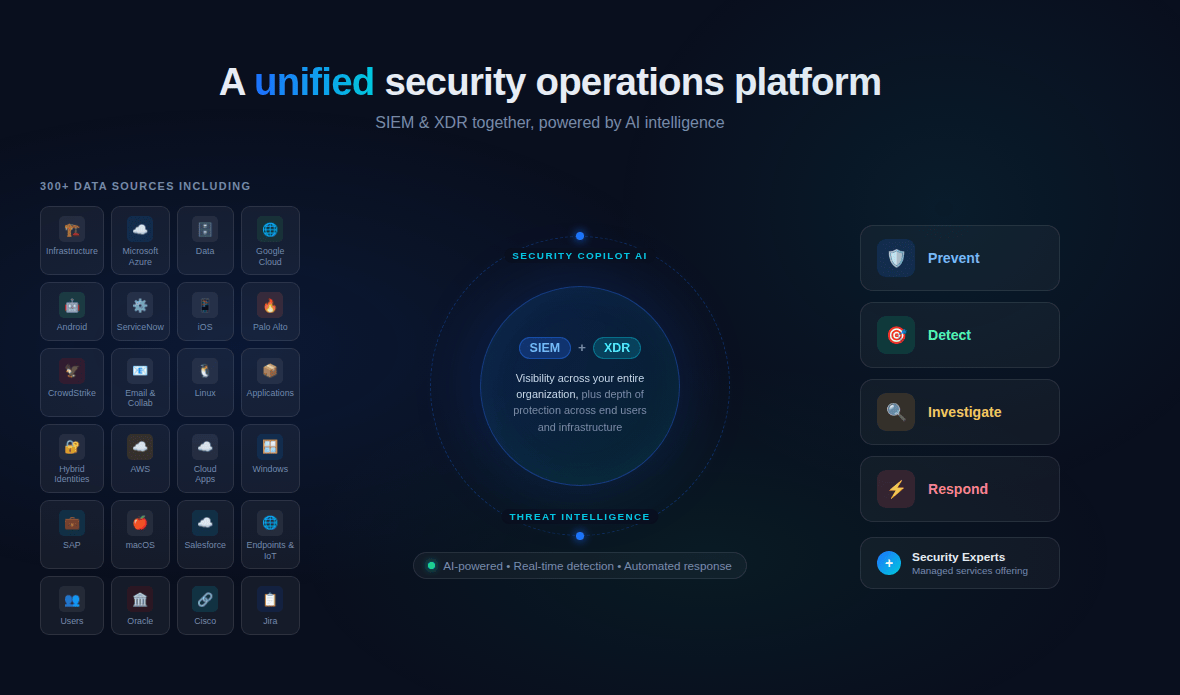
Microsoft Sentinel is now generally available in the Microsoft Defender portal, bringing SIEM and XDR operations into a unified experience. Microsoft has also announced that Sentinel in the Azure portal will no longer be supported after March 31, 2027, and customers will use Sentinel through the Defender portal only.
This transition affects SOC workflows, incident handling, analyst experience, access control, hunting, automation, and operating procedures.
Bring Microsoft Sentinel and Defender XDR together to improve visibility, investigation, correlation, and response across Microsoft security signals.
Organizations need guidance to assess readiness, reduce operational risk, tune detections, and align SOC operations with Microsoft’s future SecOps direction.
SOC teams may still rely on Azure portal workflows, legacy processes, workbooks, incidents, playbooks, and operational habits.
Existing analytics rules, hunting queries, automation rules, and threat intelligence usage may need review before operating in the unified model.
RBAC, SOC roles, analyst permissions, and separation of duties should be reviewed before wider Defender portal adoption.
We provide a structured readiness and modernization service to help organizations move from traditional Sentinel operations to a unified Microsoft SecOps model.
Review Sentinel workspaces, data connectors, analytics rules, automation, incidents, RBAC, workbooks, retention, and SOC operating procedures.
Validate Defender portal onboarding, Sentinel integration, Defender XDR alignment, permissions, hunting experience, and incident workflows.
Build a practical transition roadmap covering quick wins, risks, required changes, SOC enablement, and phased adoption.
Tune analytics rules, alert logic, incident correlation, watchlists, threat intelligence enrichment, and KQL hunting queries.
Review playbooks, automation rules, response actions, integrations, and operational dependencies to avoid disruption.
Prepare analysts with updated workflows, investigation steps, escalation paths, documentation, and hands-on knowledge transfer.
Reduce tool switching and improve investigation speed through a more unified SIEM and XDR operating experience.
Improve incident triage, correlation, enrichment, ownership, escalation, and response actions across Microsoft security tools.
Align security operations with Microsoft’s direction for unified SecOps, Defender XDR, Sentinel, and AI-assisted investigation.
Understand the current Sentinel deployment, SOC workflows, integrations, rules, playbooks, access model, and reporting needs.
Onboard and validate Defender portal experience, review permissions, confirm data visibility, and identify transition blockers.
Improve detections, automate response actions, tune noise, update SOC runbooks, and enable analysts on the new operating model.
Clear assessment of current Sentinel and Defender XDR readiness, including gaps, risks, and recommended actions.
Prioritized migration plan with short-term quick wins, medium-term improvements, and long-term operating model recommendations.
Updated investigation, triage, escalation, and response procedures aligned to Microsoft Defender portal operations.
Contact us to assess your Sentinel readiness, Defender XDR alignment, SOC workflows, detections, automation, and transition roadmap.